When you buy an old stone property in Southern Italy, everyone suddenly becomes a grant expert.
“Have you looked into the 50% construction grant?” “The EU and regional government practically pay for half your roof!” “Puglia has this scheme, it’s basically free money for historic buildings!”
Early on in our planning, someone pointed us toward a regional incentive called MiniPIA (Mini Pacchetti Integrati di Agevolazione). The headline sounded amazing: if you restore a historic building in Puglia to run as a small business or holiday accommodation, the scheme will cover up to 50% of your construction, equipment, and restoration costs.
Naturally, our ears perked up. Who turns down 50% off a renovation? But if there’s one thing we’ve learned navigating Italian bureaucracy so far, it’s that whenever something sounds that generous, it’s time to find a comfortable chair and read the fine print very carefully.
We spent months talking to local technicians, architects, and legal advisers, getting completely conflicting opinions at every turn. In the end, we found out we didn’t qualify anyway, and even if we did, we realised we probably wouldn’t have taken it.
Here’s our honest breakdown of what MiniPIA actually is, why it didn’t work for us, and how it’s quietly changed the landscape of Puglia.
What Actually Is a MiniPIA?
To be fair to the local authorities, the scheme comes from a good place. Countryside Puglia is full of ancient stone masserie, old olive mills, and historic structures that have sat empty for decades simply because restoring 18th-century masonry is wildly expensive.
The MiniPIA (and MiniPIA Turismo) is a regional grant managed directly by Puglia Sviluppo (the economic development agency of the Puglia Regional Government) and co-funded by the European Union through its regional development funds. It was created to help micro and small businesses step in, targeting projects roughly between €30,000 and €5 million.
If approved, the grant offered up to a 50% non-repayable contribution (fondo perduto) covering things like:
- Structural masonry work, roof restoration, and stone repointing.
- Solar installations, heat pumps, and insulation.
- Fixtures, machinery, and furniture.
- Architectural and engineering fees.
The catch? You had to turn the property into an active economic project, like an agriturismo, a guest house, a boutique stay, or a cultural venue.
Why We Didn’t Qualify: The Fine Print
When we first started asking around, the answers were all over the shop. One local consultant told us “No worries at all, you’ll definitely get it!”, while another shook their head and said “Zero chance.”
Eventually, we sat down with a specialist who walked us through the actual technical criteria, and we hit our dealbreaker: The Entire Building Requirement.
To qualify for MiniPIA Turismo when restoring a rural or historic property, you have to own and restore the entire, fully detached complex.
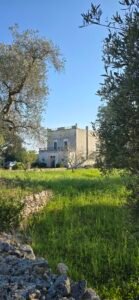
While our masseria is a massive stone building sitting on two hectares of olive groves, it historically shares a party wall with an attached neighboring structure built generations ago. Because it isn’t a 100% standalone, isolated estate, we didn’t meet the strict architectural layout requirements for the scheme.
At first, hearing that felt like a proper letdown. But as we looked closer at what accepting the grant would have actually required from us, that disappointment turned into a bit of a relief.
Why We Wouldn’t Have Taken It Anyway
Even if our building had been totally detached, we realised the conditions attached to MiniPIA just didn’t suit how we wanted to live and build.
Here is what taking a MiniPIA grant actually looks like in practice:
1. You Still Have to Find the Cash First
The government and EU don’t just transfer half the money into your account on day one. MiniPIA operates on a reimbursement basis. You have to fund 100% of the build upfront yourself or take out a formal bank loan.
In fact, accessing the scheme usually requires you to secure an approved bank mortgage covering at least 50% of the project cost. That means paying monthly bank interest on a massive loan throughout the entire 2- to 3-year build while waiting for approval and reimbursement.
2. The Final Inspection Risk
The grant money is only released at the very end of the project, after regional inspectors conduct a thorough technical, financial, and environmental audit.
If your project fails to meet a specific requirement, whether that’s missing an energy efficiency target, a delay in filing paperwork, or a minor venue specification change, the grant can be reduced or revoked entirely. If that happens, you’re left sitting on 100% of the bank debt and all the interest you paid along the way.
3. Strict Long-Term Conditions
Taking public funds means following public rules. Under MiniPIA, you are legally bound to operate the business for a fixed period (usually 3 to 5 years minimum) under strict commercial parameters. You can’t easily pivot, change how you use the building, or decide to keep it as a private family home without risking heavy financial penalties or having to pay the funds back.
For us, the extra layer of risk, bank debt, and bureaucratic oversight just didn’t make sense. We wanted the freedom to restore Masseria Le Camere at our own pace, using our own decisions, without overcomplicating our life.
How MiniPIA Changed Puglia
Although this recent round of MiniPIA funding has ended, there’s no doubt it made a massive mark on Southern Italy.
Over the seven-plus years we’ve been coming to Puglia, the change in the countryside has been huge. Years ago, driving around Ostuni, Fasano, and Ceglie Messapica, you’d pass dozens of magnificent, crumbling stone ruins that felt too daunting for anyone to take on.
Schemes like MiniPIA, backed by both EU funds and regional support, gave local families, young entrepreneurs, and investors the push they needed to save historic masseria’s, revive empty village structures, and create jobs in local tourism.
Grants will always come and go, MiniPIA has finished for now, but new green energy and regional incentives will inevitably take its place.
For us, letting go of the “50% off” dream was actually a great reality check. It forced us to focus on the basics: taking things step-by-step, funding our build responsibly, and making choices that respect the history of the house without adding unnecessary stress to the journey.
If you’re looking at buying or renovating in Italy, definitely explore what grants are out there! Just make sure you look past the headlines, get independent technical advice, and check that the conditions actually fit your life before diving in.